2016
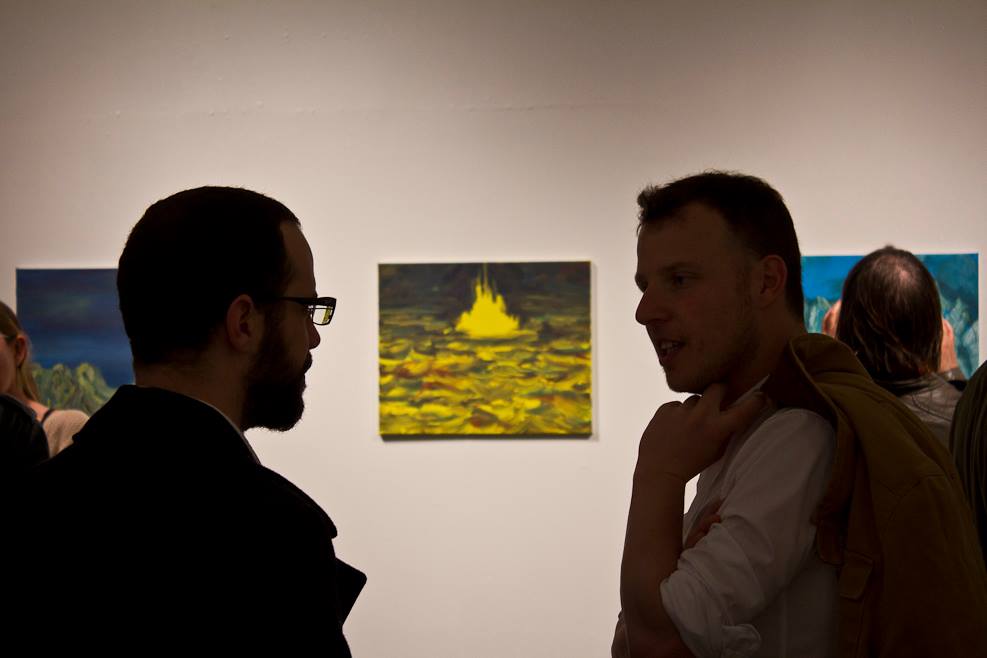
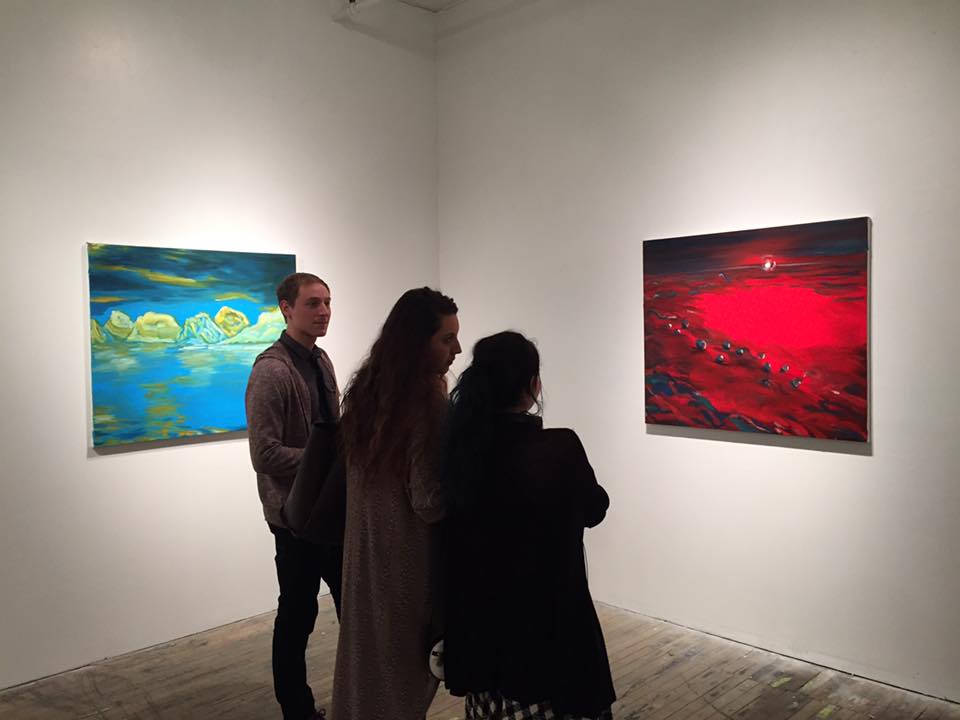
JOY GARNETT: Ends of the Earth, March 25 – April 24, 2016, Slag Gallery, Brooklyn, NY
Garnett’s paintings dwell on scenes that cannot be observed with the naked eye: overlooked edges of unknown landscapes in moments that resemble twilight, the interval between night and day that is paradoxically both and neither. Her source material, found images drawn from surveillance footage and night vision photographs, reveals our contemporary condition of watching and being watched. Her painted landscapes invite a contemplative gaze as they conjure an atmosphere of a world half-asleep but waking and on the cusp of something new.
PRESS
Two Coats of Paint (April 7, 2016): 10 ideas and influences: Joy Garnett, PDF
2014
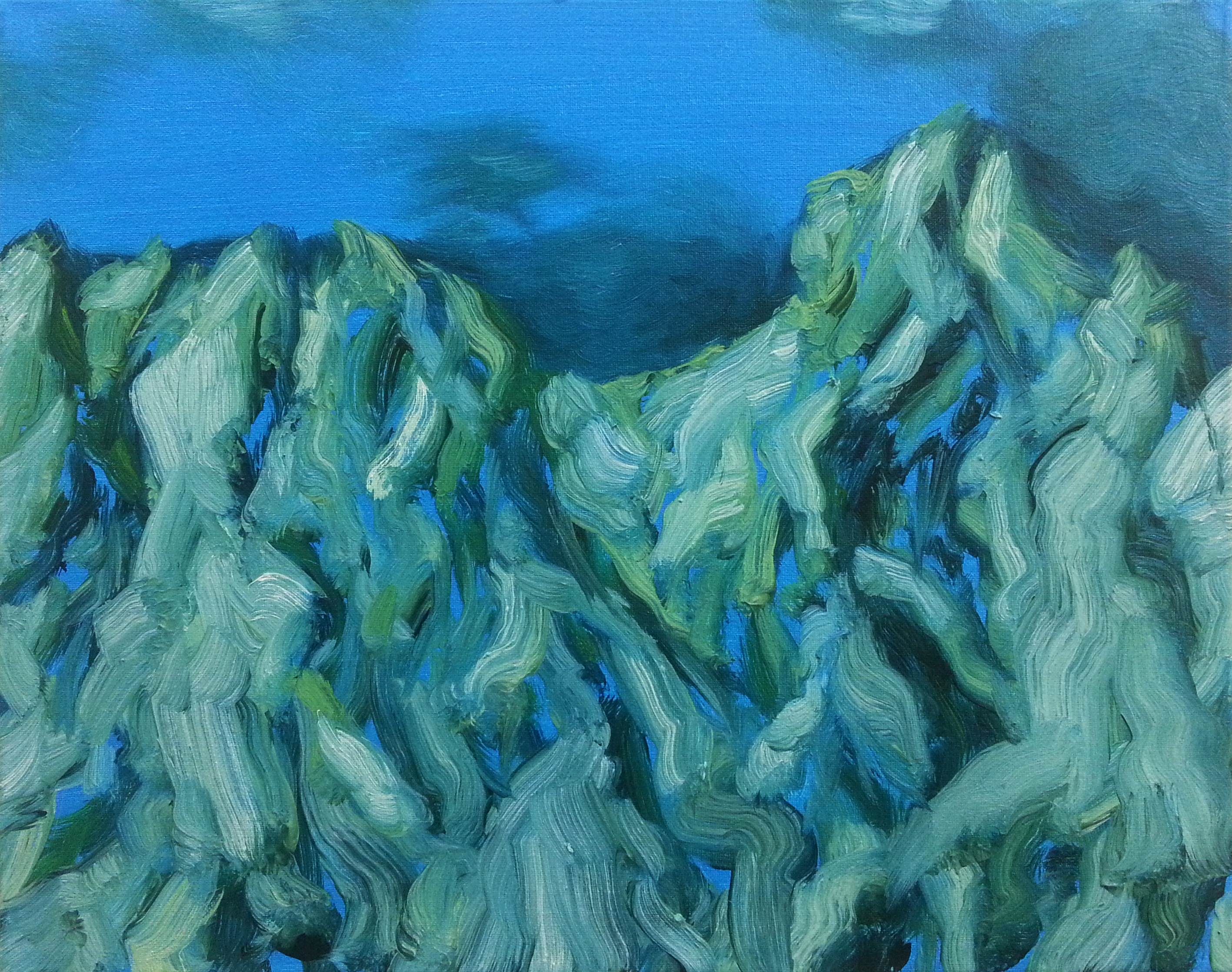
Joy Garnett: Being There, Platform Gallery, Seattle, WA, October 23-December 13, 2014
PRESS
Erin Langner, New American Paintings: Being There Again and Again: Joy Garnett at Platform Gallery
New American Paintings review 2014 [PDF]
2010

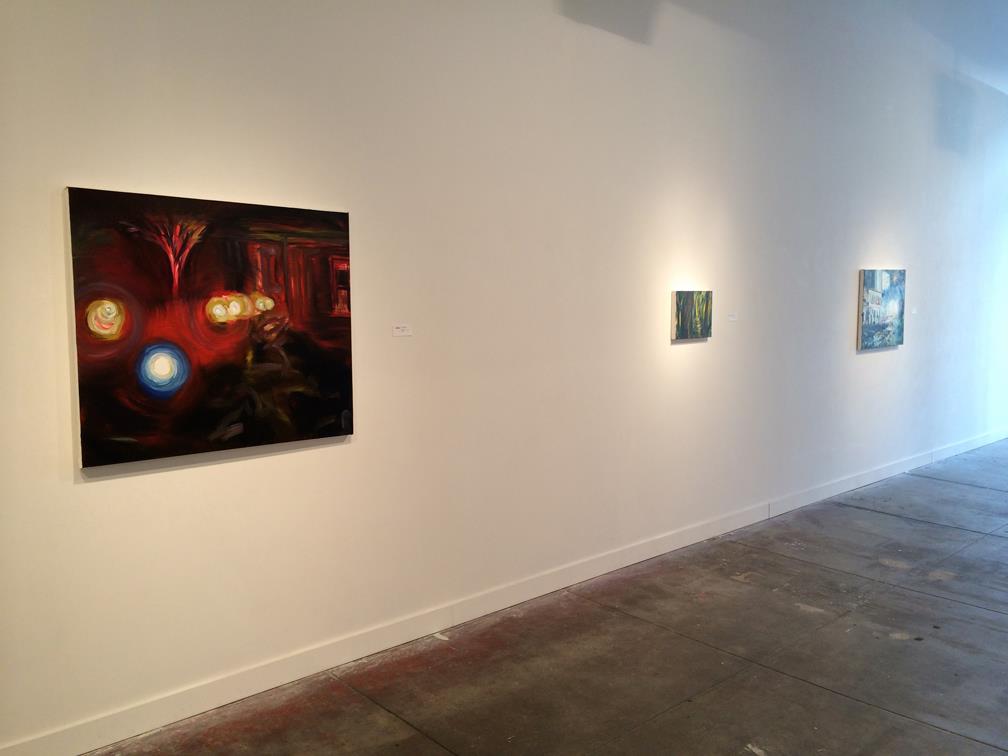
Boom & Bust, Winkleman Gallery, NY. October 15 – November 13, 2010
Installation shots: Photography by Etienne Frossard
PRESS
Carly Zinderman (JustLuxe): Joy Garnett’s Momentary Explosions are Blowing Up the Art World
Carolina Miranda (WNYC): Joy Garnett: Boom & Bust, at Winkleman Gallery
Sharon L. Butler (Huffington Post): Blast Radius
Joanne Mattera Art Blog: Big Bang
Doug McClemont (Saatchi Online Magazine): Top Ten Shows in New York: November 2010

Joy Garnett: China Three Gorges Project, Roger Williams University School of Architecture, Art and Historic Preservation, Bristol, RI, March 3 – 31, 2010
2008

Joy Garnett: New Paintings. Winkleman Gallery, NY, February 15 – March 15, 2008.
PRESS
Lauren O’Neill-Butler, Artforum (February 2008): Joy Garnett, Winkleman Gallery
Jennifer Coates, TimeOut NY (March 2008): Joy Garnett, Winkleman Gallery
2007

Strange Weather, National Academy of Sciences, Washington, DC, May 5 – July 30, 2007
Exhibition catalogue: Lucy Lippard; Andrew Revkin
PRESS
Jessica Dawson (The Washington Post): Katrina, Immortalized in Oil
“Strange Weather”
Lucy R. Lippard
In a period when media-influenced imagery and digital mediums are ubiquitous in the mainstream art world, Joy Garnett has perversely gone in the other direction. As a self-described “information junkie,” her sources are photographs from the news media in the five years since September 11th, 2001. But as an artist determined to control her own means of production, she makes good old-fashioned landscape paintings…with a twist.
Garnett sees her process in terms of Open Source Culture (OSC) — the more-or-less public reservoir from which anyone can drink deeply of imagery initially intended for a sip at best. She describes this apparently new system, available for translation, transformation, or appropriation, as “really the longstanding operative principle for innovation… Nothing comes out of thin air.” Thus her work parallels that of collagists and appropriators — software hackers, DJ samplers and a number of artists. But these straightforward paintings are not visual collages so much as conceptual collages; the comments on art and technology are invisible, while the planetary/atmospheric ramifications take front stage.
“Strange Weather” is an astute understatement for what the world is undergoing. Equally strange is the apathy with which news of cataclysmic change is being received. Garnett’s work reflects that change in a deceptively conventional manner. We have all seen a plethora of images — from the news and from art photographers — of the devastation wrought by hurricane Katrina. But when we see those images, usually perceived/received so fast they barely register, translated into independent works of art, they are less recognizable. Flood 3 becomes a majestic icon of destruction in the fall-of-empire genre.
First we are immersed in the great billows of paint — smoke and clouds, shards of fire, bodies of land — then we move on to the context. The apocalyptic nature of the events depicted is most evident in the skies. Some are operatically dramatic, others are eerily calming, color alone conveying the unusual. Art history is evoked only to be revoked. Evac is half sky, half land like many Dutch 17th-century canvases; Flood 5 and Plume 2 evoke the ominous sublime of monumental 19th-century landscapes. Devastation is understated in Live Oak, where the great old tree (many were victims of the storm) recalls early Mondrian. The rising waters appear peaceful and beneficent; they are in fact lethal.
Landscape painting contains its own paradoxes in these days of photographic ascendancy, when photographs have finally been recognized as no more “truthful” than any other medium. Curiously, the distance afforded by a painting permits a more intimate experience of the effects of Katrina than the fragmented, momentary blitz of media photography. By reinventing her photographic sources, Garnett gives us time to be there, in place, on solid ground, however terrifying that may be. Simultaneously, by merging political and physical phenomena, she pulls the rug out from under our previous sources of information, perhaps even making us nostalgic for the impersonal flashes of media imagery that allow us to avoid responsibility for the environmental and social catastrophes we face.
Copyright Lucy R. Lippard 2006
National Academy of Sciences (U.S.), J. D. Talasek, Alana Quinn, and Lee Boot. Convergence: The Art Collection of the National Academy of Sciences. Washington, DC: National Academy of Sciences, 2012.
Strange Weather, exhibition catalog, National Academy of Sciences, Washington, DC, 2007.
Lucy R. Lippard is an internationally known writer, activist and curator. She has written eighteen books on contemporary art, and is the recipient of a Guggenheim Fellowship, the Frank Mather Award for Criticism from the College Art Association, and two National Endowment for the Arts grants in criticism.
2004
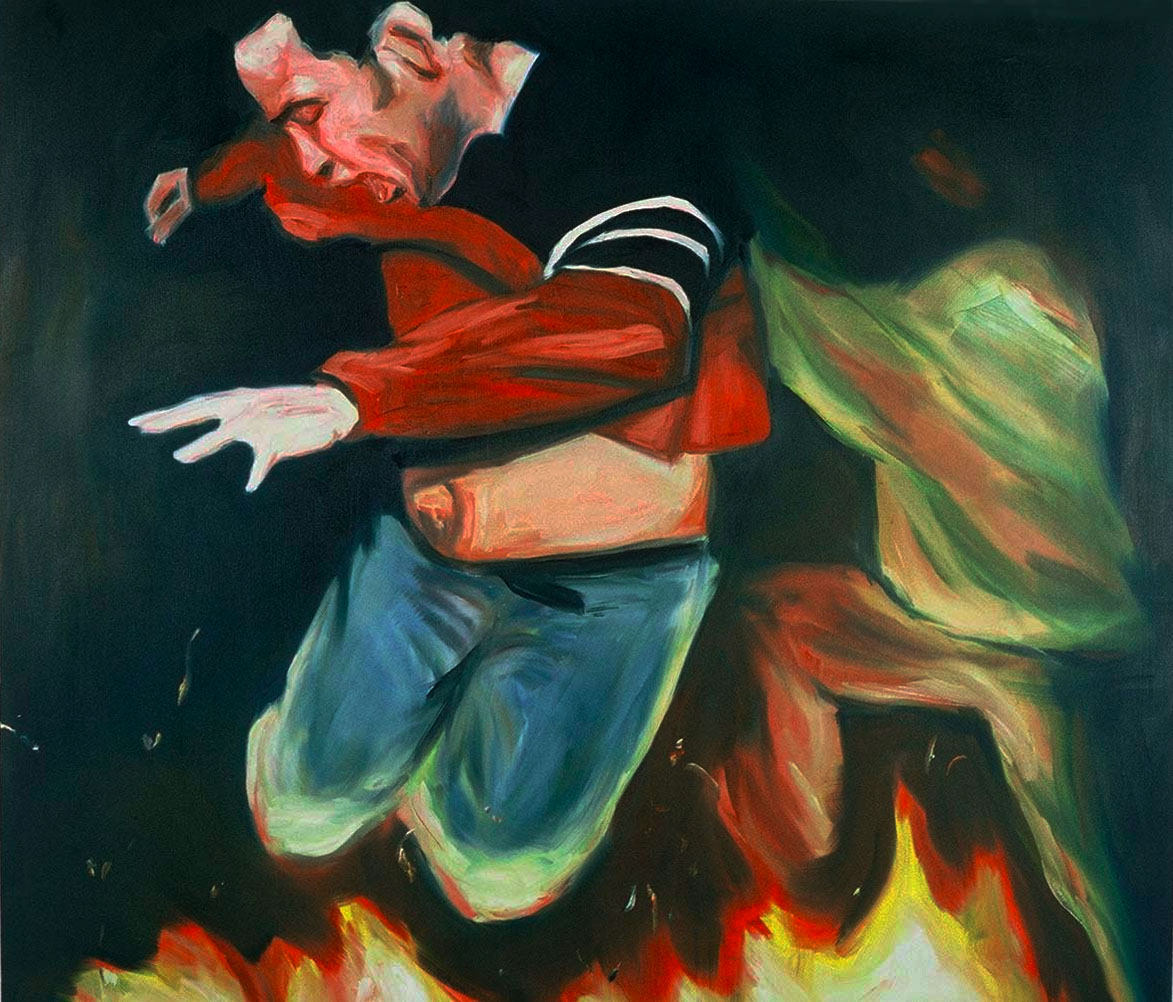
RIOT, Debs & Co., NYC, January 2004
PRESS
The New Yorker: Joy Garnett “Riot”
2001
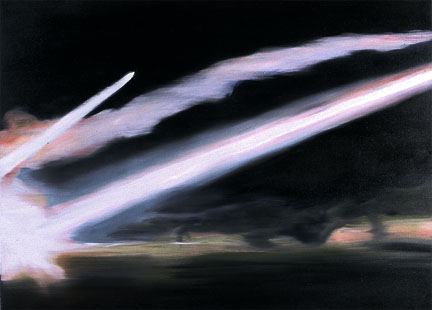
ROCKET SCIENCE, Debs & Co., NYC, April 2001
Exhibition Catalogue with essays by Manuel DeLanda and Bruce Sterling
PRESS
Kevin Pratt (TimeOut NY): “Rocket Science” at Debs & Co.
1999

PRIVATE COLLECTION (Paris, France)
BUSTER-JANGLE, Debs & Co., NYC, May 1999
artist’s multiple
PRESS
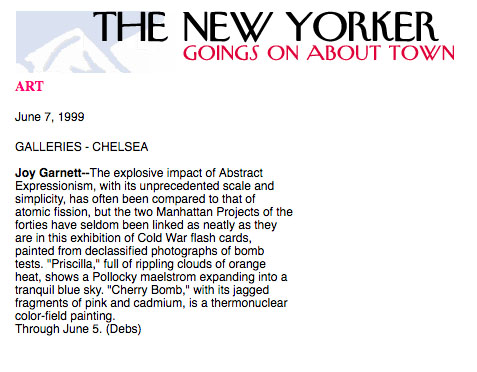
Ken Johnson (The New York Times): Joy Garnett at Debs & Co.
Christopher Phillips (Art in America): Joy Garnett at Debs & Co.
Tim Griffin (TimeOut NY): Joy Garnett, “Buster-Jangle”
Save
 Joy Amina Garnett
You must be logged in to post a comment.